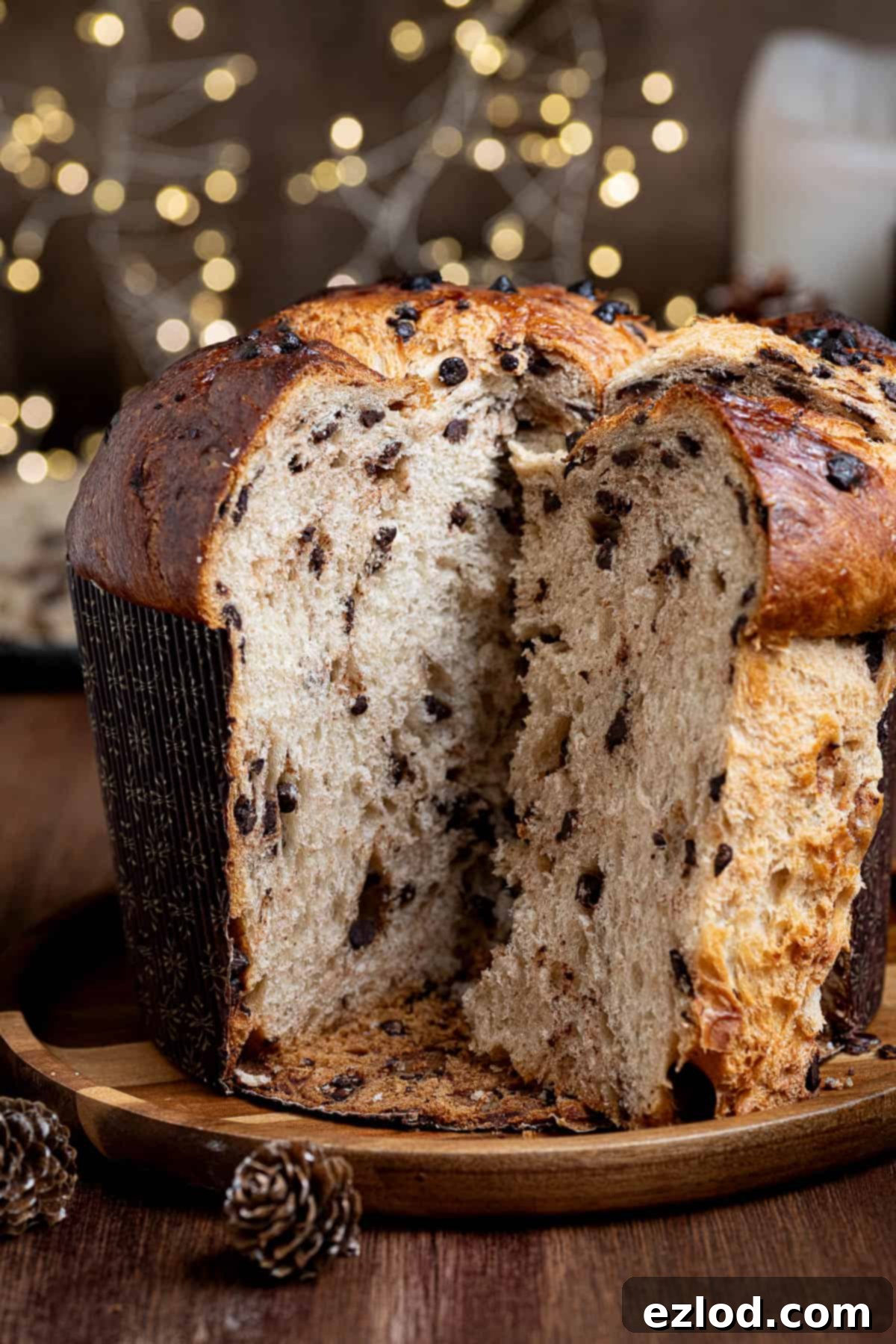
The Ultimate Vegan Panettone Recipe: Light, Fluffy, and Delicious
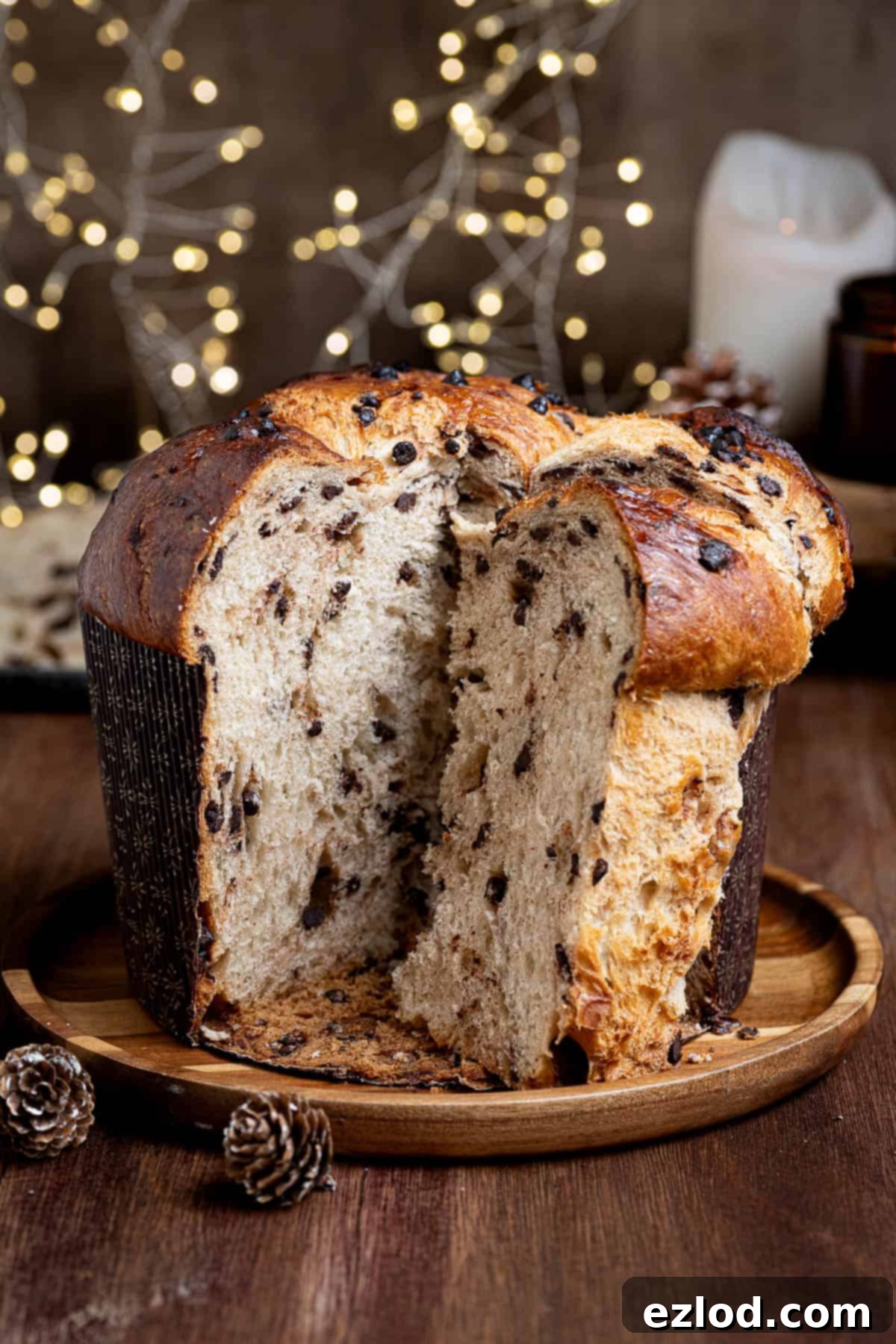
Indulge in the festive flavors of Italy with this incredible vegan panettone recipe. This bread is super light, fluffy, and airy, boasting a sweet, citrus-scented flavor. Studded with candied peel and raisins (or chocolate chips if you prefer!), it’s a plant-based twist on a classic Christmas treat.
Panettone is an Italian Christmas tradition, and making your own is well worth the effort. This recipe delivers a satisfying baking experience with a spectacular, homemade result that will impress your family and friends.
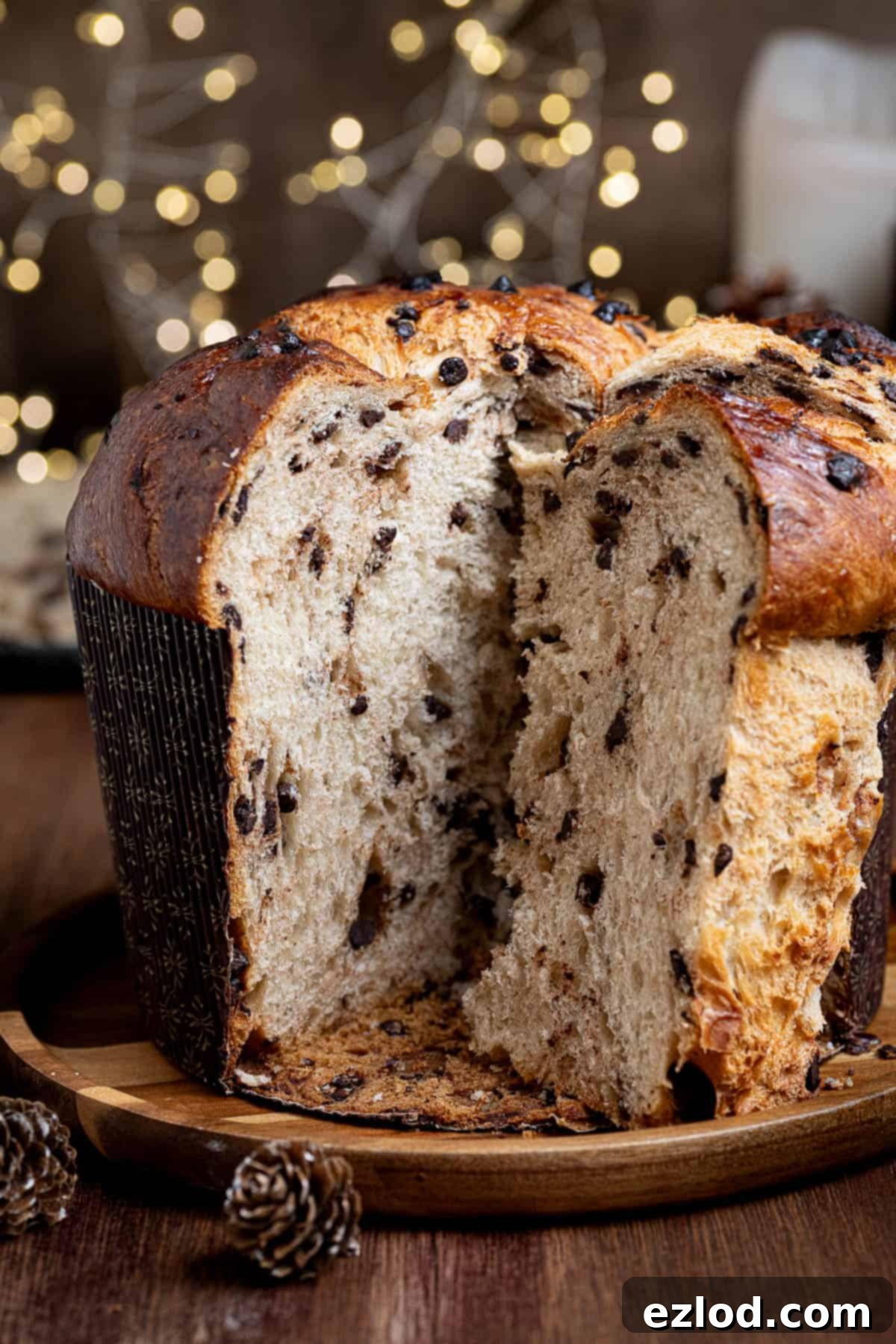
This recipe started as a Colomba Pasquale, the Easter version of panettone. Due to timing, it was adapted into this fantastic panettone recipe. Some adjustments were made to the flavor profile and voila, a Christmas masterpiece was born.
Inspiration came from King Arthur Baking and Emiko Davies. The recipe veganizes Emiko’s version, incorporating an overnight starter similar to the King Arthur recipe. Plus, the dough volume has been slightly reduced to better fit the panettone mold.
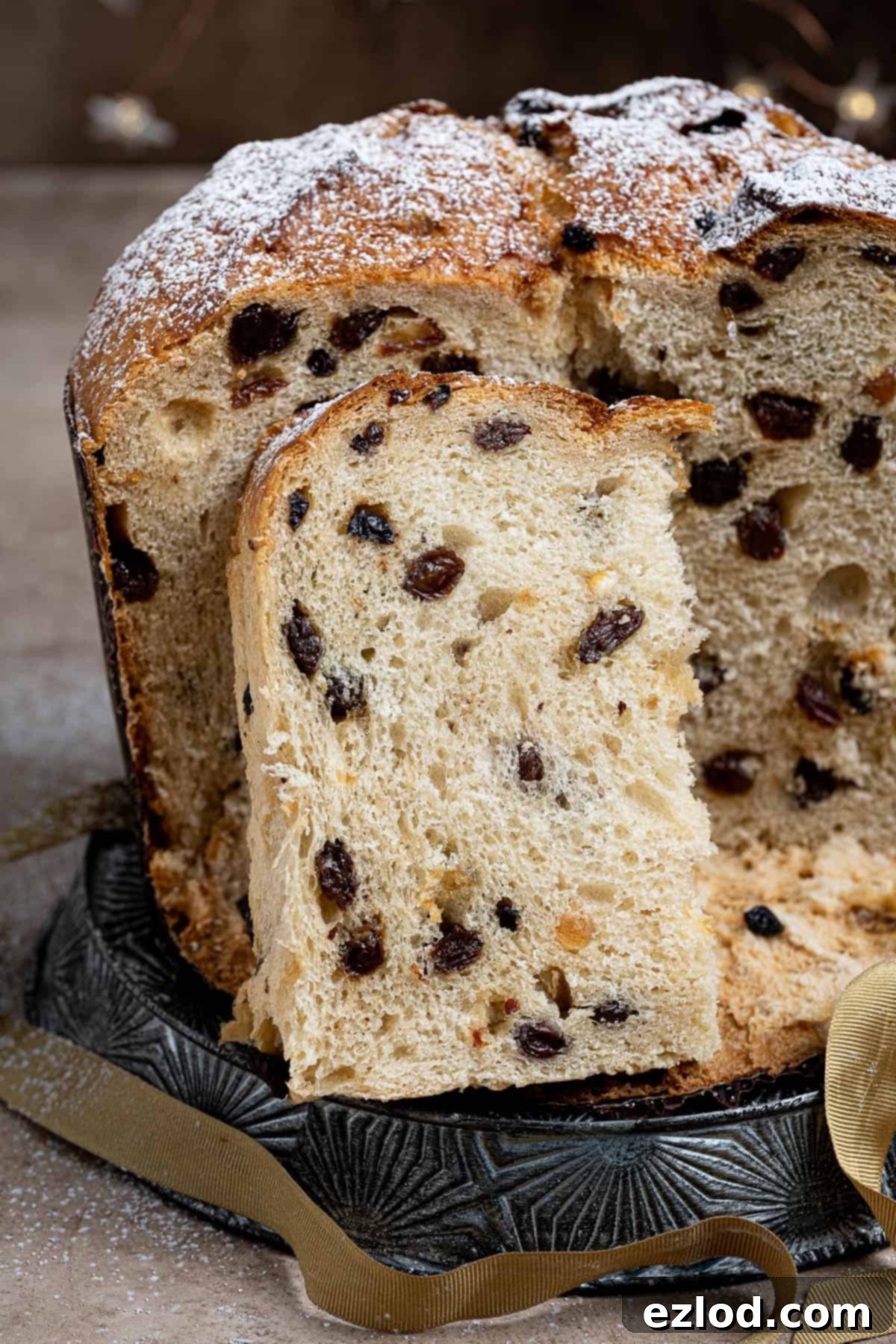
What is Panettone?
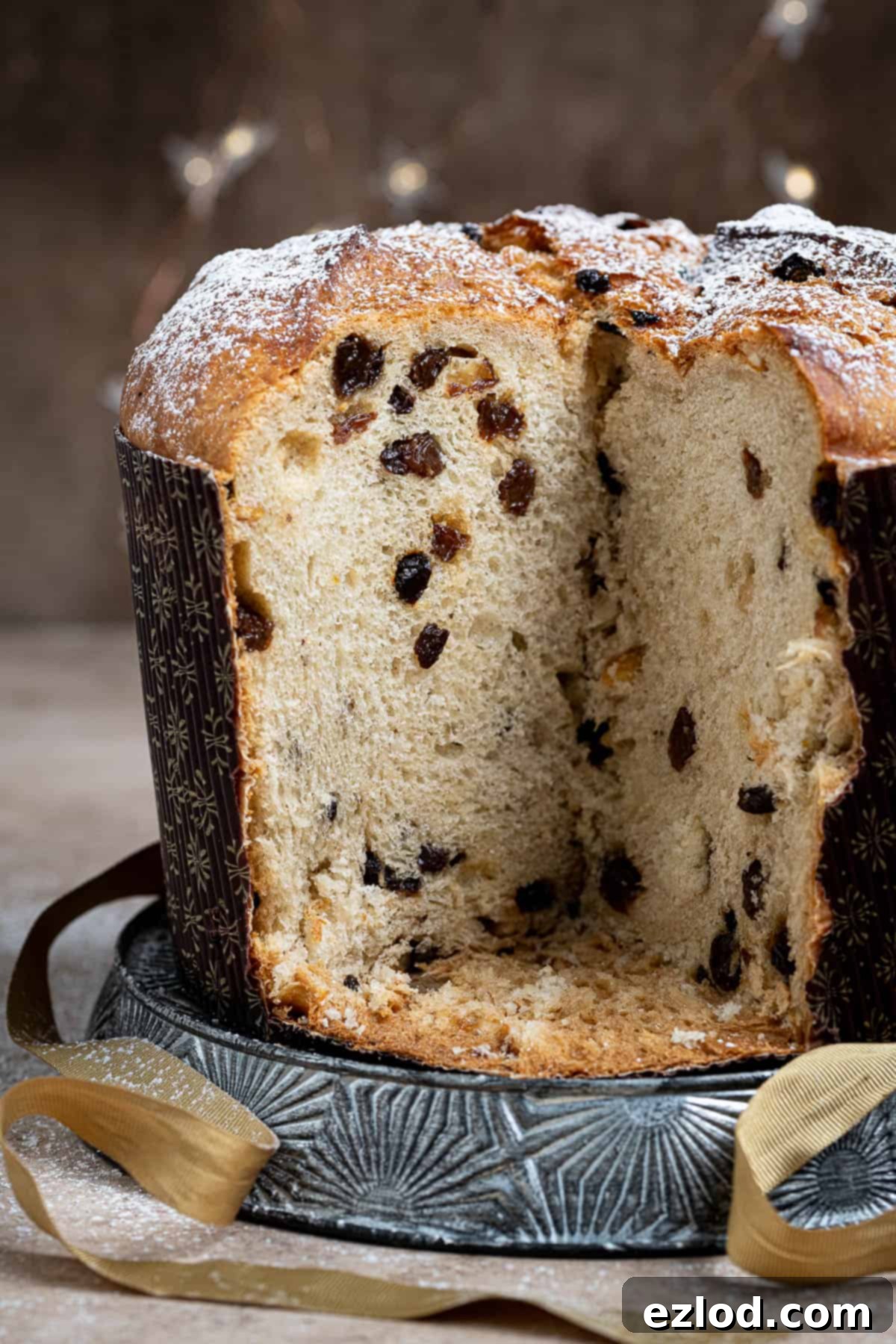
Panettone is a sweet Italian bread traditionally enjoyed during Christmas. It boasts a buttery, slightly citrusy flavor with a uniquely light, soft, and fluffy texture. Raisins and candied peel (or chocolate chips) are commonly added, giving it a delightful mix of flavors and textures.
A traditional panettone requires a lengthy and complex process that spans several days. Multiple rises and dough stages are essential. A stiff sourdough starter, instead of commercial yeast, contributes to its distinctive flavor and airy crumb. The bread must be cooled upside down after baking to prevent it from collapsing due to its delicate structure.
Traditional panettone is heavily enriched with butter and egg yolks, which makes it a no-go for vegans. Swapping out butter for a vegan block butter is easy enough. However, replacing the egg yolks is a bigger challenge. In the end, the best result came from replacing the moisture from the eggs with extra soya milk rather than using any specific egg replacer.
This vegan panettone recipe simplifies the process for the home baker, using fast-action yeast instead of sourdough. While still complex, the recipe allows for less margin for error than its traditional counterpart. This recipe isn’t for beginner bread makers. Prior experience shaping dough and recognizing proper kneading and proofing is a must.
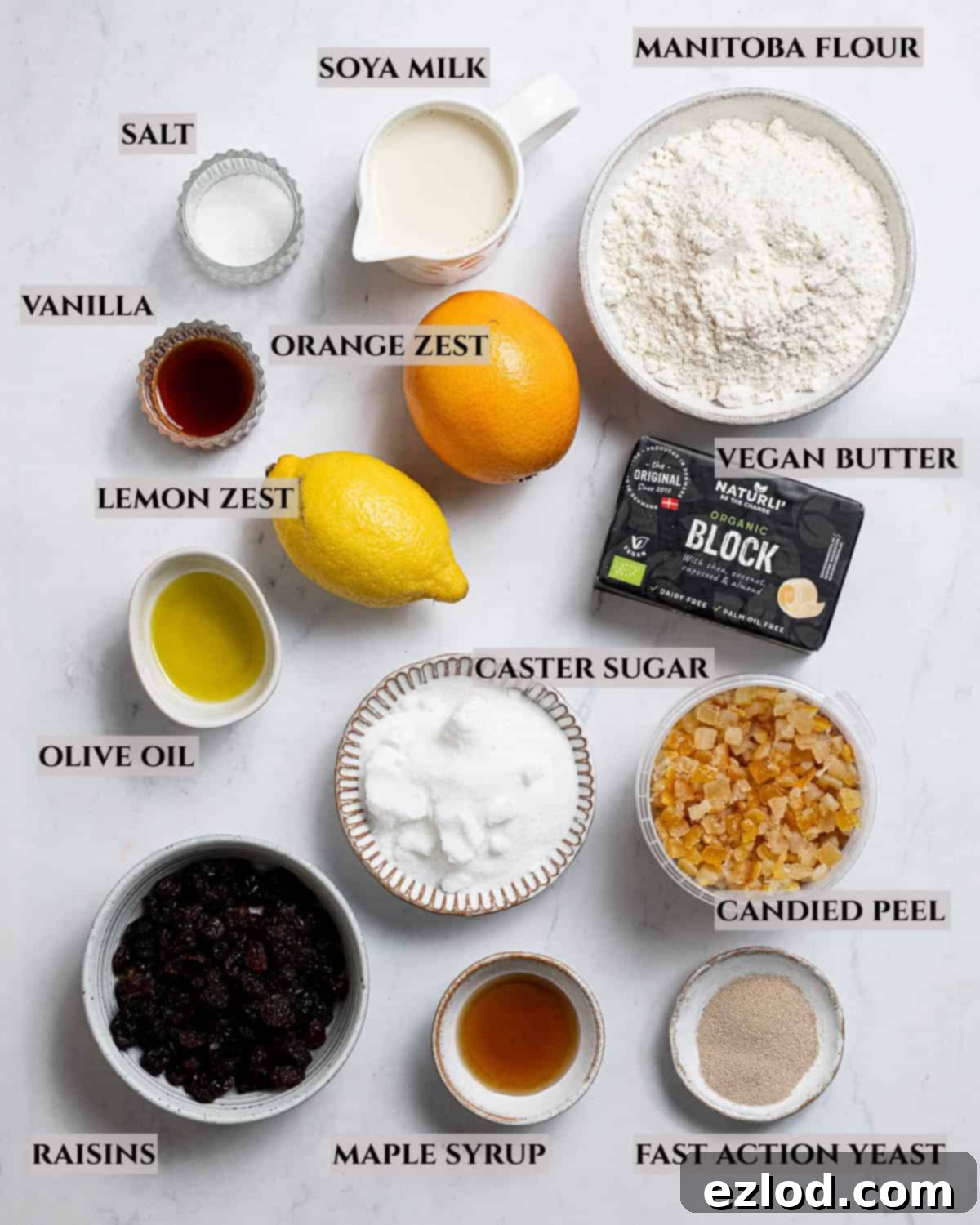
Key Ingredients Explained
Achieving panettone perfection hinges on using the right ingredients. Here’s a detailed breakdown to guide your shopping list:
Bread Flour: This is the cornerstone of a successful panettone. You *must* use strong white bread flour. All-purpose or wholemeal flour will not provide the necessary structure. The higher the protein content, the better. Manitoba flour, a Canadian flour with around 14% protein (compared to the usual 12% in bread flour), yielded the best results. Some specialty flours are specifically designed for panettone and contain 15-16% protein.
Yeast: This recipe utilizes fast-action (instant) yeast for its reliability and ease of use.
Vegan Block Butter: It is important to use vegan *block* butter, not the spreadable kind sold in tubs. Tub butter has too high a water content, which will negatively affect the dough’s texture.
Plant-Based Milk: Soya milk is recommended because of its high protein content, which helps with dough development. Oat milk or almond milk should also work, but make sure they are unsweetened.
Sugar: Either caster or granulated sugar can be used. Other sugars or sweeteners aren’t recommended as they may alter the taste and texture of the bread.
Salt: Salt is a crucial ingredient. It’s not just for flavor; it strengthens the gluten for better dough structure, controls fermentation, and helps preserve the bread. Fine table salt mixes easily and evenly into the dough.
Orange and Lemon Zest & Vanilla: These add the characteristic citrus and vanilla notes that are essential to panettone’s flavor profile. Fresh zest makes all the difference.
Raisins and Candied Peel: These are classic panettone additions, but if you aren’t a fan, substitute with chocolate chips! Both classic and chocolate chip versions have been tested and proven to be equally delicious.
Essential Equipment for Baking Panettone
Having the right equipment can make all the difference in achieving panettone perfection. While some items are essential, others are strongly recommended for a smoother baking experience.
Ideally, you will need:
- A 1kg panettone mold. Sturdier corrugated card molds are better than thin paper.
- A probe thermometer. Essential for checking the internal temperature.
- A lame (bread scoring blade). For scoring the top of the panettone.
- Long metal skewers. Used for cooling the panettone upside down.
- A stand mixer. It is highly recommended to use a stand mixer for ease.
- A digital scale. Precise measurements are essential for bread baking.
Step-by-Step Instructions: Making Your Vegan Panettone
(Full measurements and instructions can be found in the recipe card at the bottom of the page)
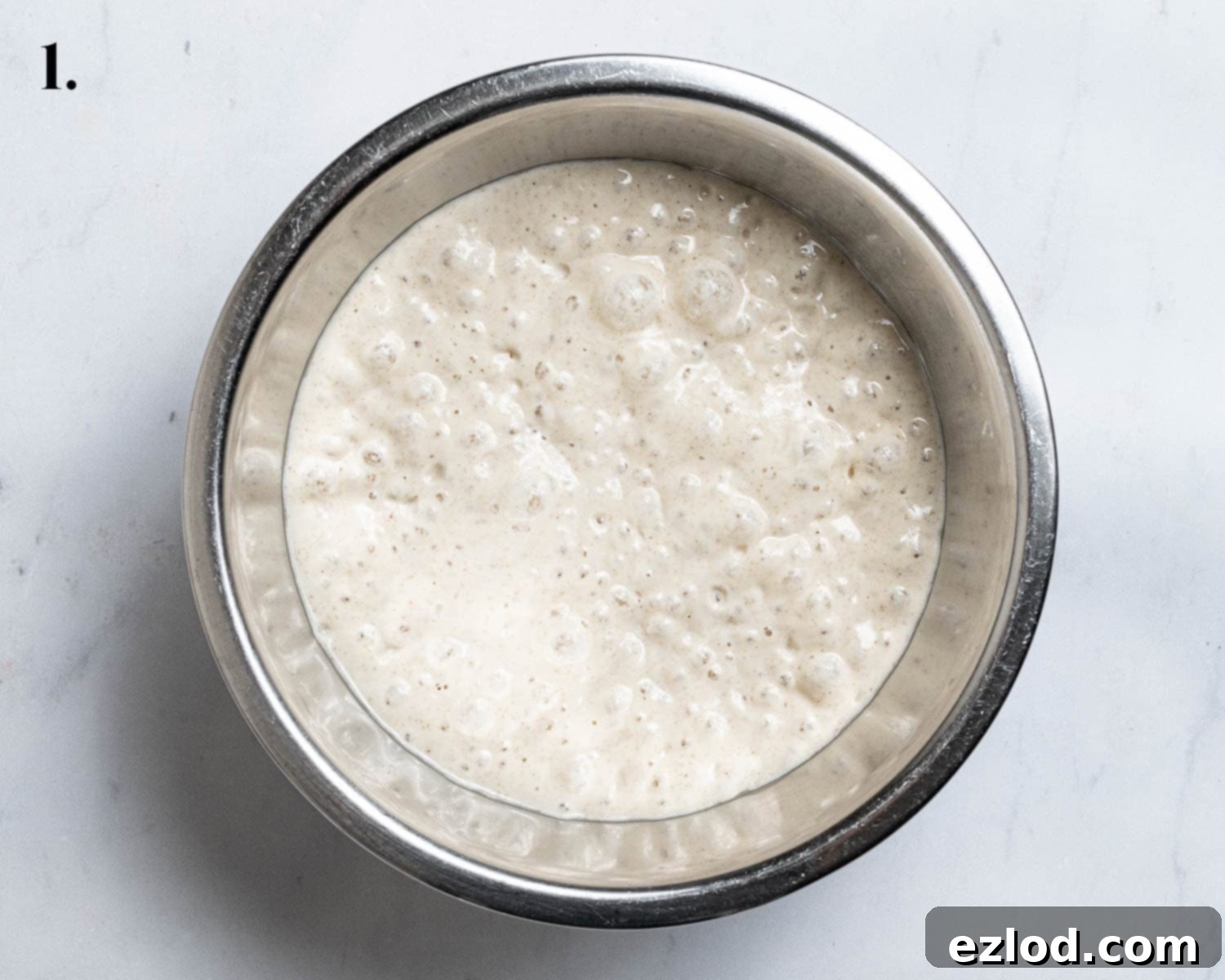
- Step 1: Start the evening before you want to bake the panettone. Mix the flour, water, and yeast for the
poolish, cover, and let ferment at room temperature overnight.
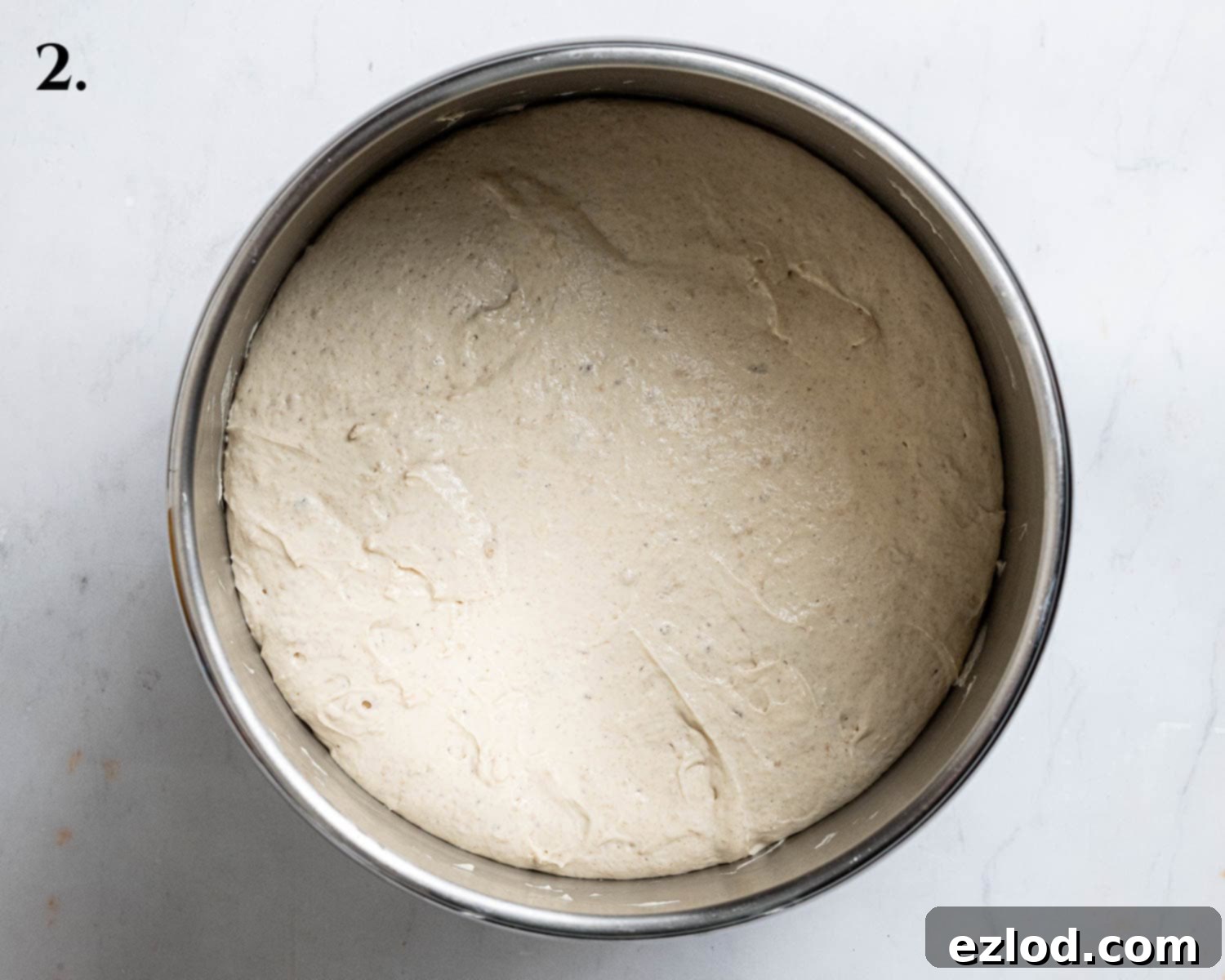
- Step 2: The following morning, scrape the poolish into a stand mixer bowl fitted with a dough hook.
Add flour, lukewarm milk, yeast, and butter. Mix until well combined. Cover and let rise until doubled, 1-2 hours.
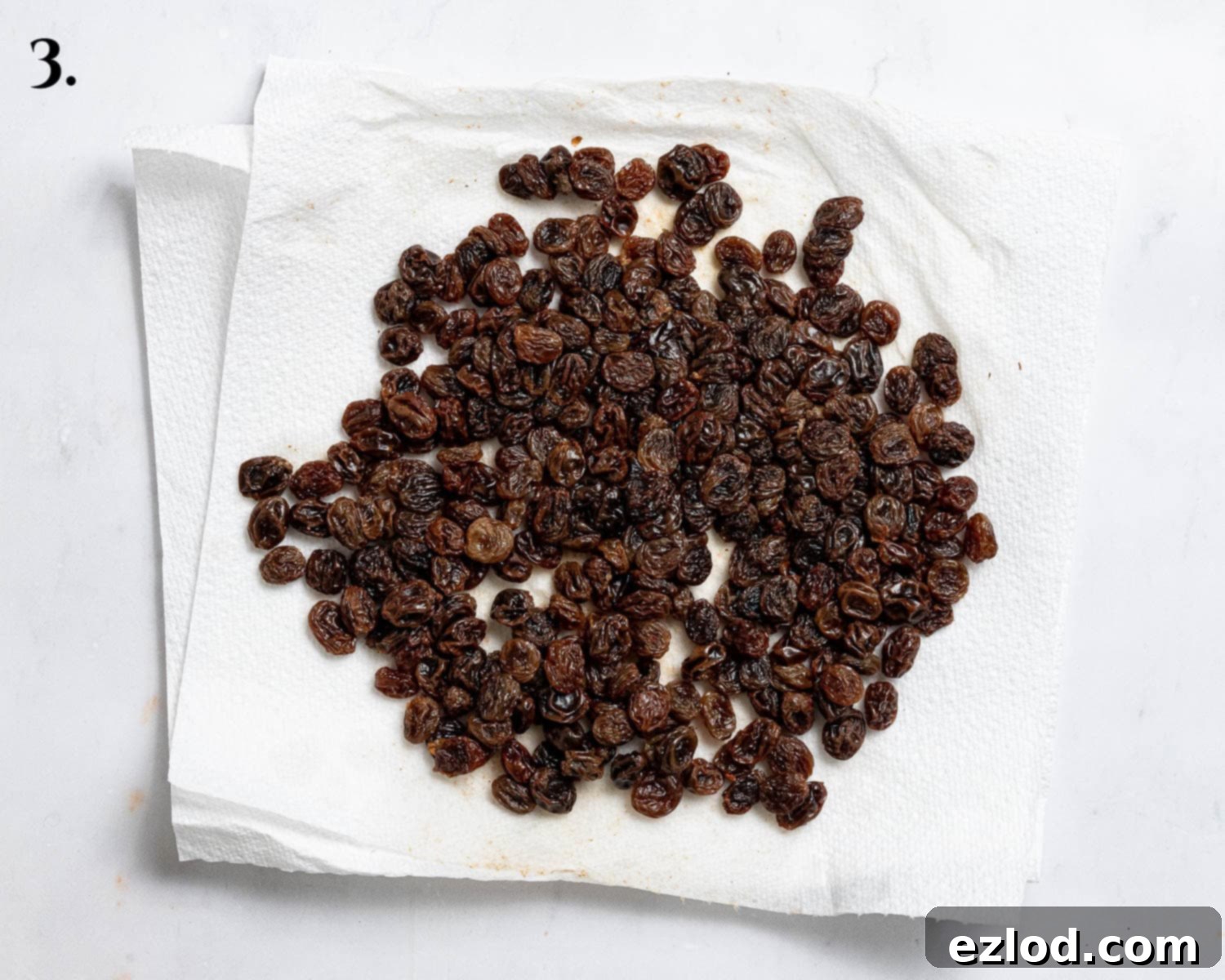
- Step 3: Place the raisins in a bowl, cover with boiling water, and soak for 20 minutes. Drain well and pat
dry with kitchen paper.
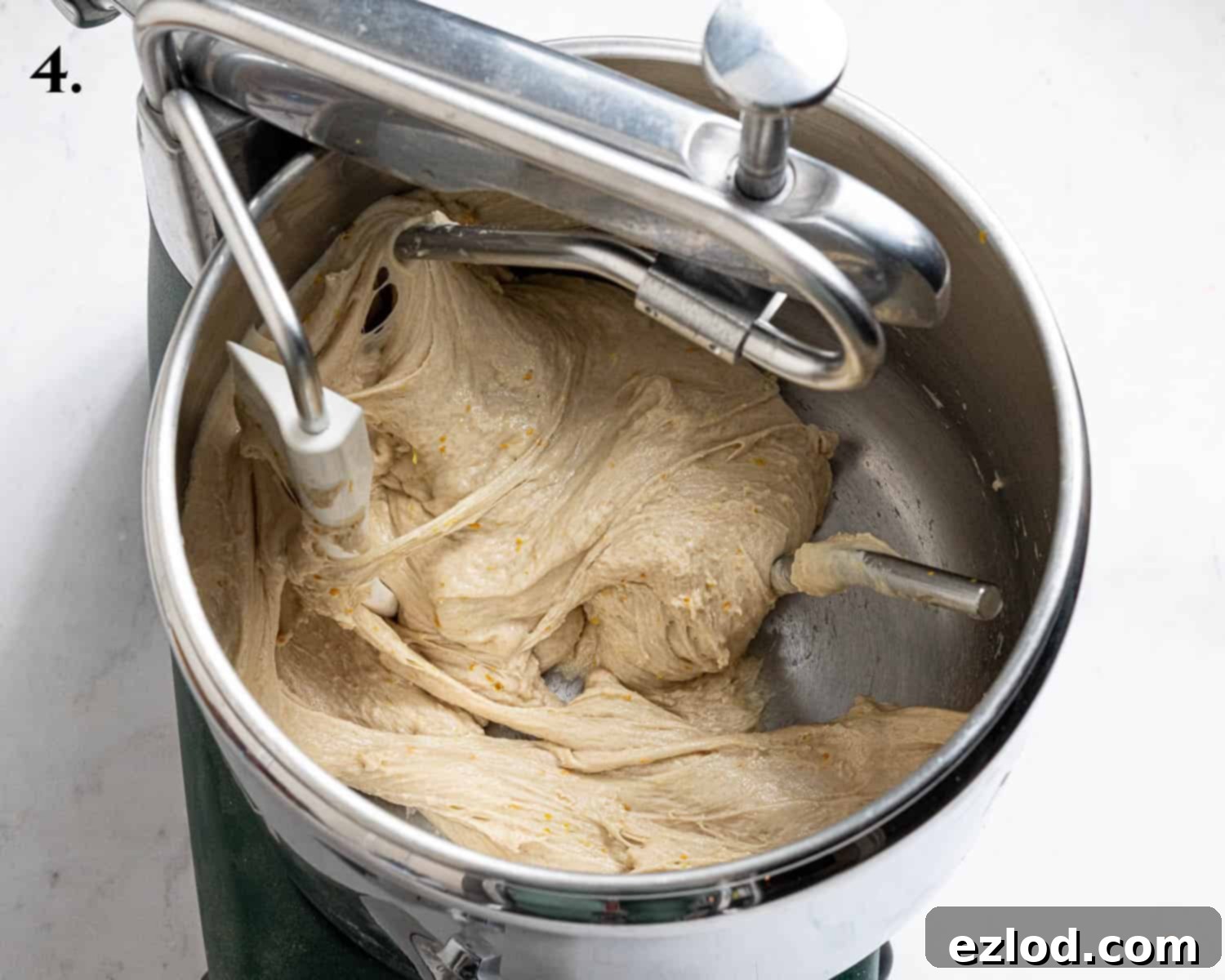
- Step 4: Add flour, sugar, orange zest, lemon zest, and vanilla to the dough in the stand mixer. Knead until
very stretchy and stringy.
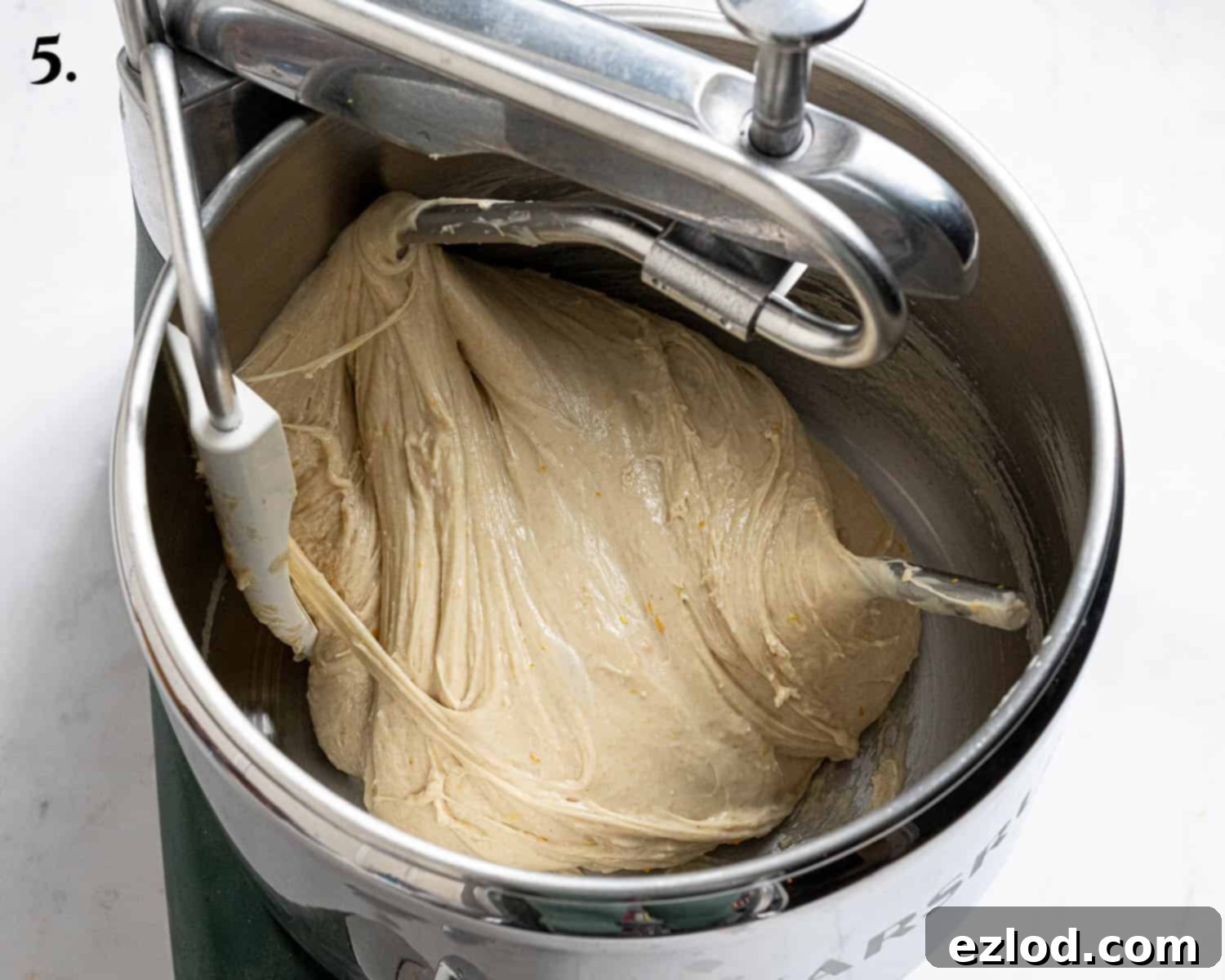
- Step 5: Knead in the butter gradually, then add the salt and mix until well combined.
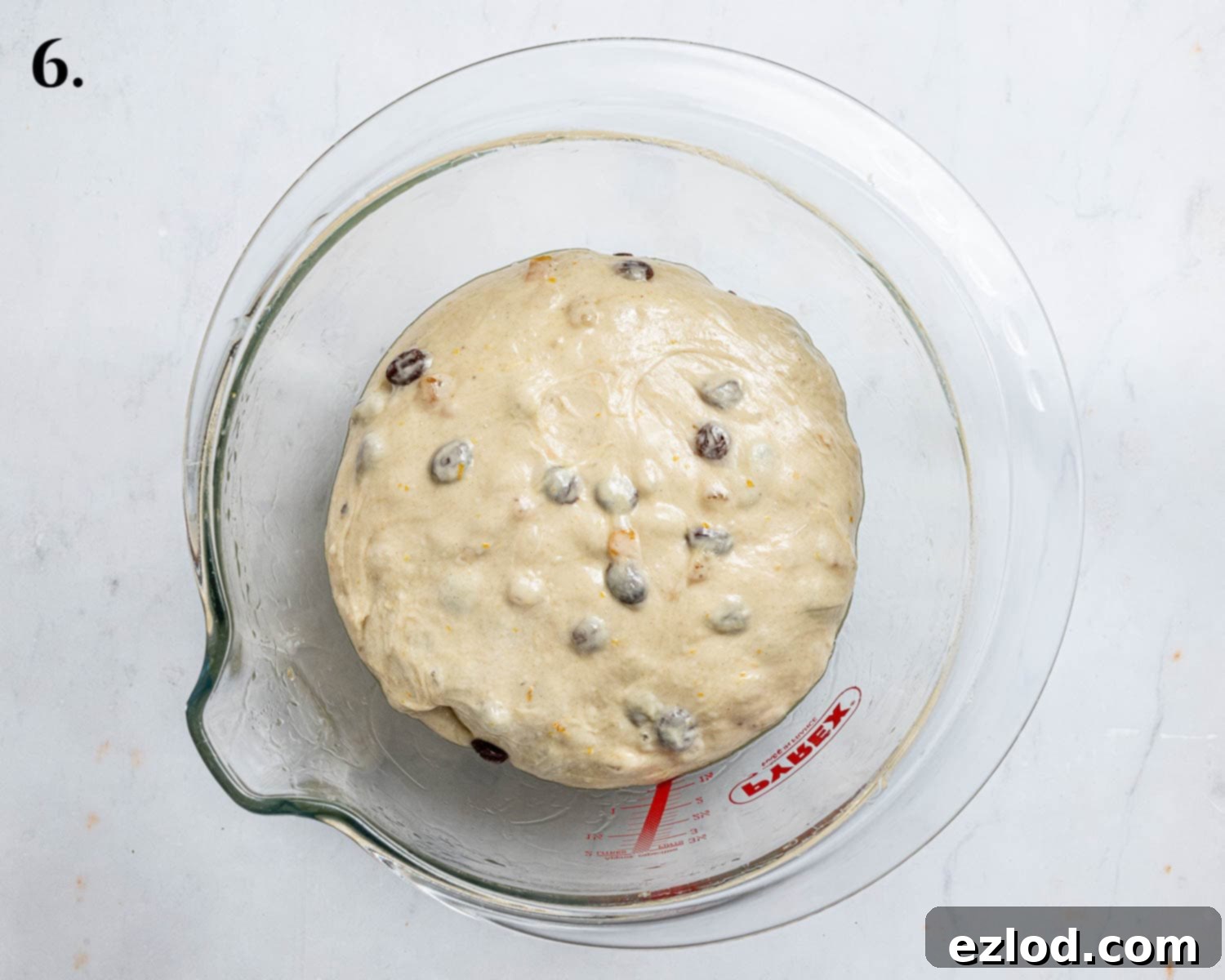
- Step 6: Add the drained raisins and candied peel and mix until evenly distributed. Shape the dough into a
ball and place in a lightly oiled bowl.
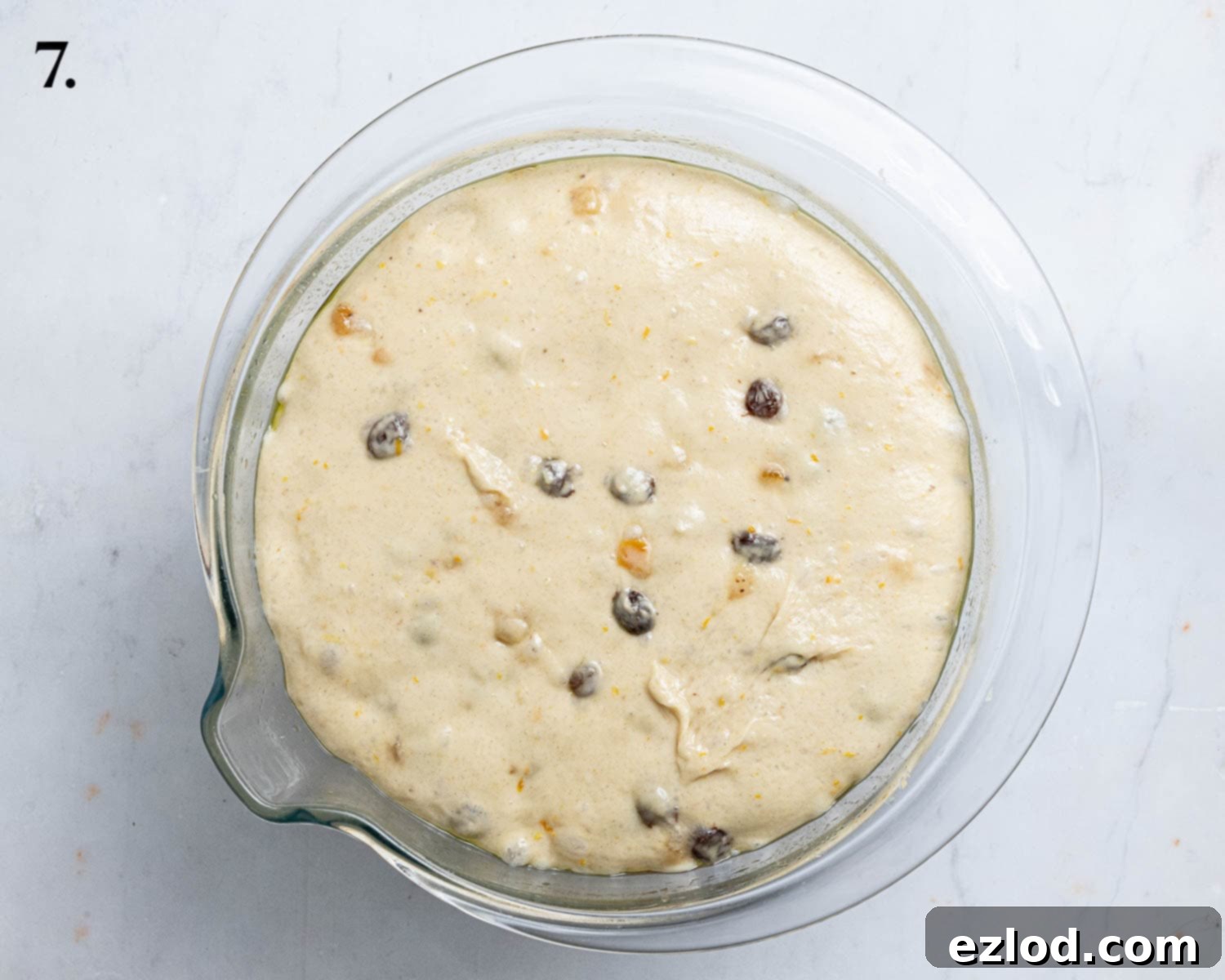
- Step 7: Cover and set aside to rise until about tripled in size, approximately 3 ½ hours.
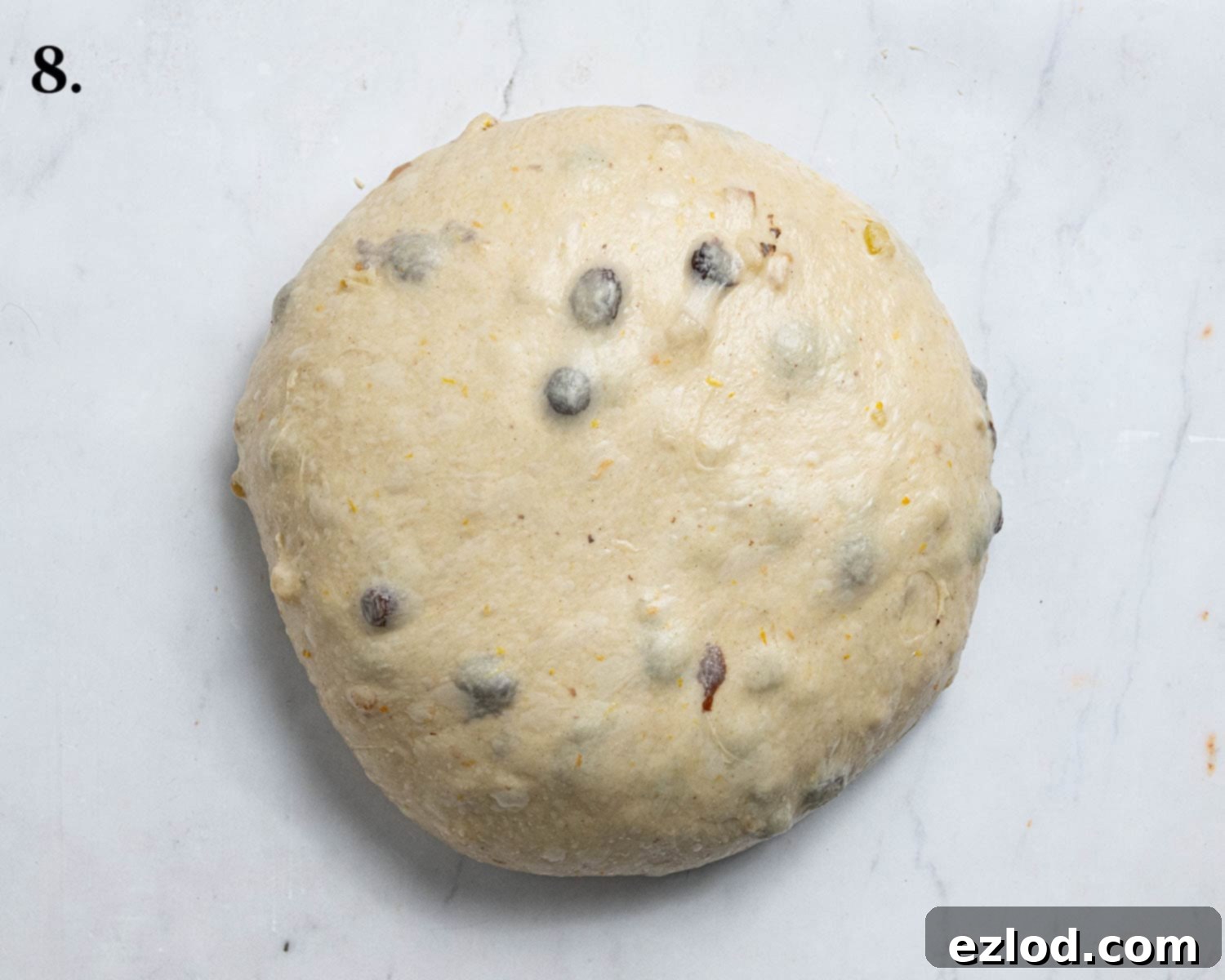
- Step 8: Scrape the dough out onto a work surface and shape into a ball.
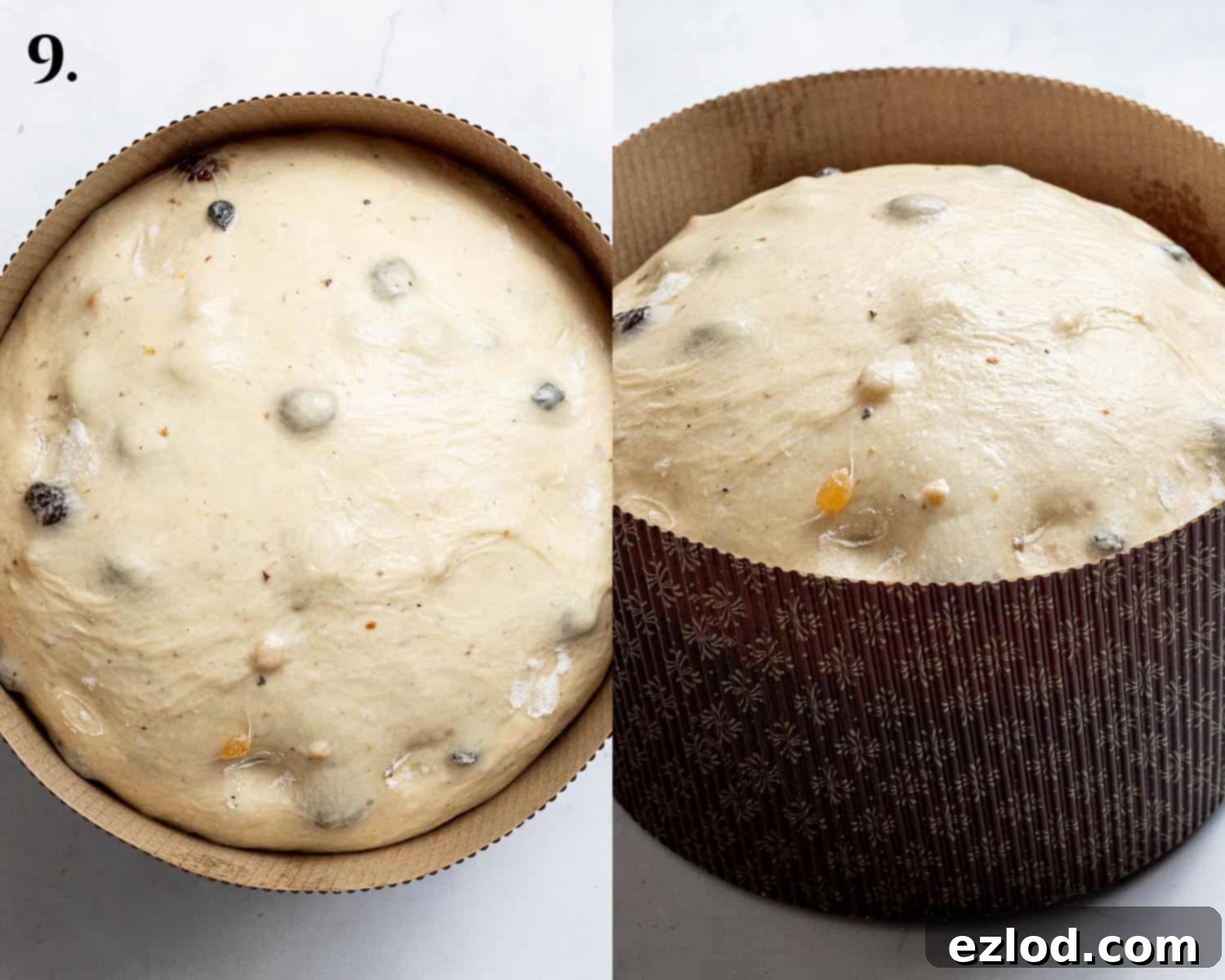
- Step 9: Place the ball of dough, seam side down, into the panettone mold. Cover and set aside to rise
until the dough has almost reached the top of the mold.
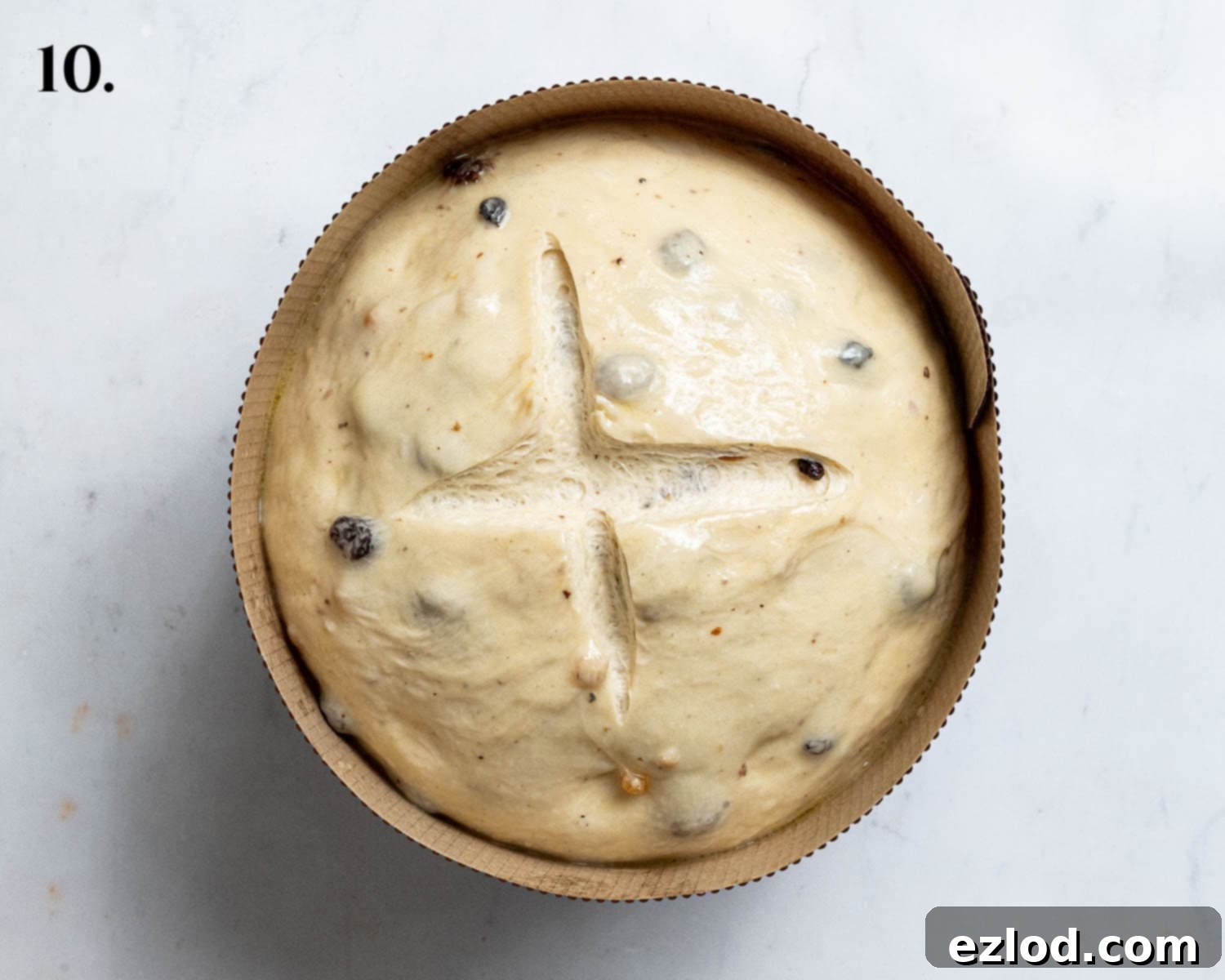
- Step 10: Gently brush the top of the dough with the glaze and use a lame to score a cross in the middle.
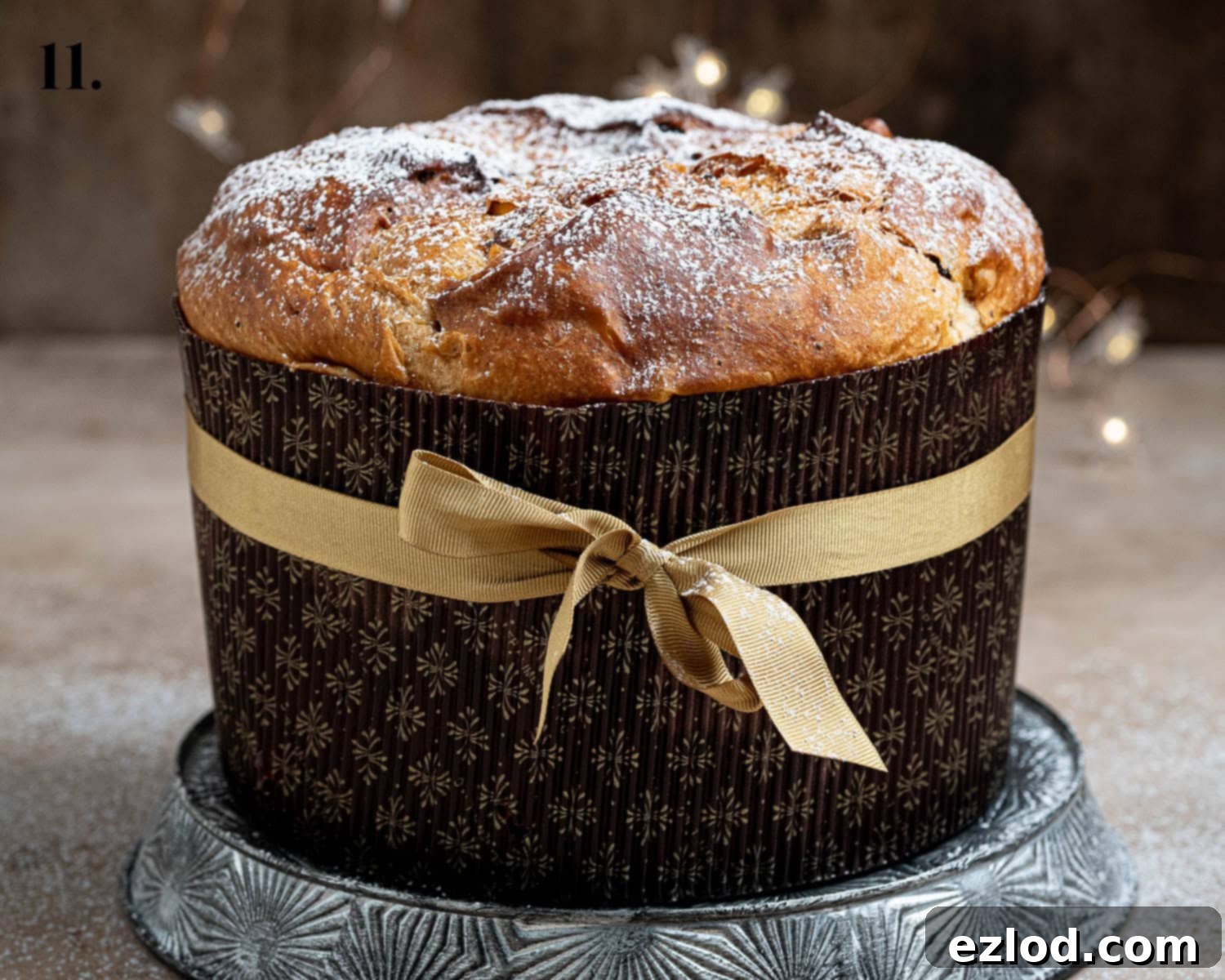
- Step 11: Bake for 60-75 minutes until the internal temperature has reached at least 90°C / 195°F.
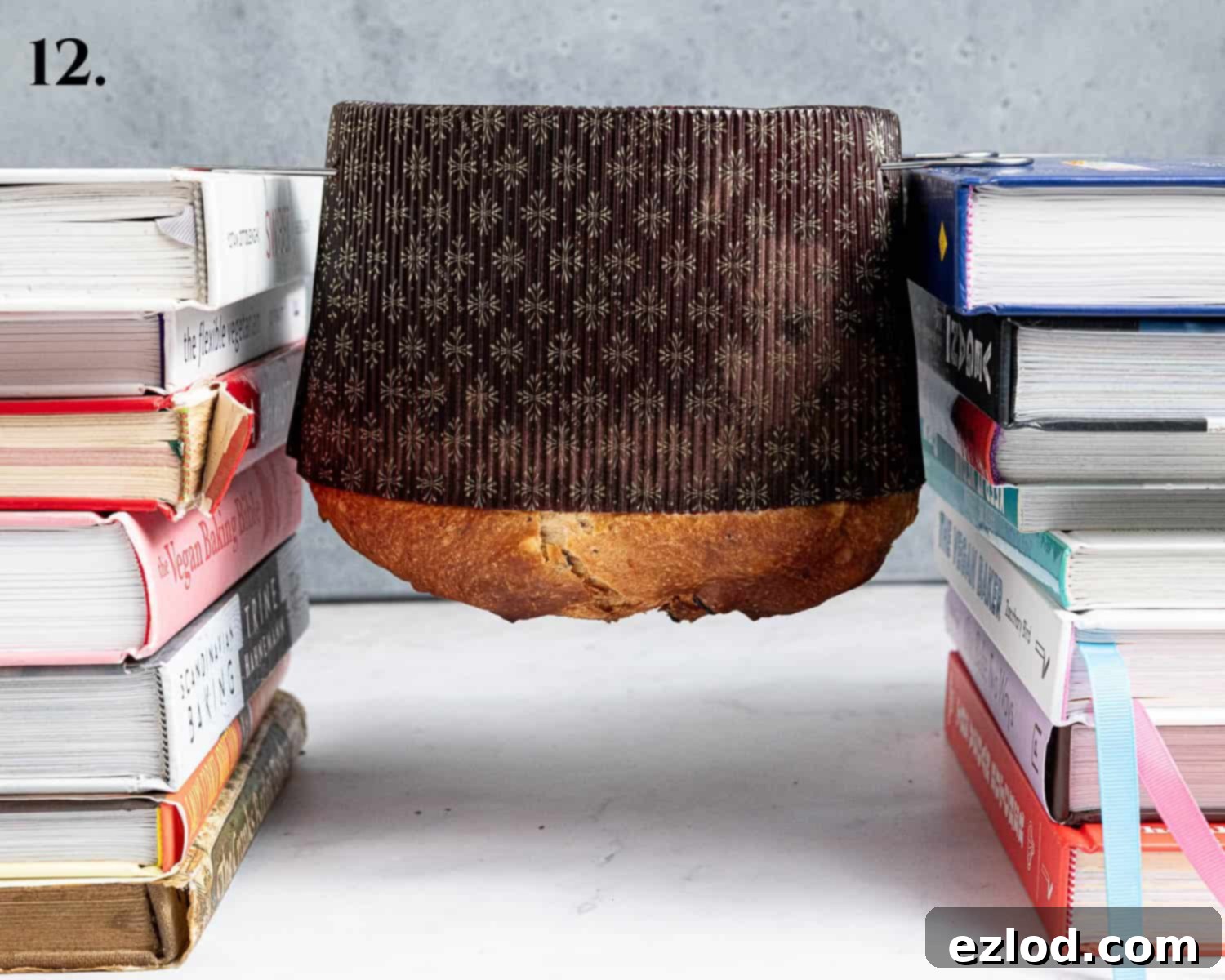
- Step 12: Immediately after baking, pierce the panettone through the case with 2 long metal skewers.
Suspend it upside down between two tall objects and let cool completely.
Essential Tips for Panettone Success
Here are some tips to help you make a perfect panettone:
Read through the entire recipe before starting to understand the timing of each step.
Watch videos on the pirlatura shaping method
for guidance on shaping the panettone. Building sufficient surface tension is crucial during shaping, but avoid tearing the
dough.
This is a two-day process. Create a starter in the evening, let it ferment overnight, then make the first and second doughs,
rise, shape, rise again, and bake on the second day. The dough requires a long time to rise because it’s so heavily enriched. Start
the first dough early enough in the morning so you can complete the recipe by evening. Starting around 7:30 am usually means
the panettone will be baked by 6:00 pm.
For accuracy, this recipe uses metric measurements instead of US cups. Use a digital scale for the best results.
Steam helps keep the crust soft while the panettone rises. Place a roasting tray in the bottom of the oven during preheating, then
pour boiling water into it when you put the panettone in the oven.
To cool the panettone upside down, use skewers to suspend it between tall objects like stacks of books, tall boxes, jars, a deep
pan, or chairs. If using chairs, ensure it’s out of reach of pets.
Instead of one large 1kg panettone, you can make two 500g ones. The baking time will likely be shorter, potentially around 40
minutes, but this hasn’t been tested.
Test doneness using a probe thermometer. It should register at least 90°C / 195°F.
Frequently Asked Questions
A poolish is a type of pre-ferment in bread making. It adds flavor, improves texture, and extends
shelf life. It’s a wet mixture of equal parts flour and water with a small amount of yeast, left to ferment overnight before
adding to the dough. Many homemade panettone recipes call for a biga, another pre-ferment. Technically, a
biga is a lower-hydration, stiffer dough, while a poolish is a wet batter. However, the terms are often used interchangeably.
Either a biga or a poolish works well to add complexity and improve structure, but this recipe uses a poolish.
Store the panettone in an airtight container or sealed bag at room temperature for up to a week. It’s
best eaten within a few days of baking, but older bread can be toasted or warmed before serving. If it gets too stale, use
it for bread and butter pudding!
Yes! This vegan panettone freezes well. Wrap it tightly to avoid freezer burn, then freeze for up to
3 months. Thaw at room temperature before serving.
Technically, yes, but it will be a long and messy process. This dough is sticky and needs extensive
kneading until it’s extremely stretchy and stringy. A stand mixer is highly recommended. When kneading, avoid flouring the
surface as you will incorporate too much flour and the dough will be too dry. If the dough sticks too much, lightly oil the
work surface and your hands. A bench scraper is helpful for unsticking the
dough from the surface.
As long as you stick to a total quantity of 225g and avoid very wet ingredients (so no fresh fruit),
you can vary the mix-ins. Dried cranberries and pistachios would work well, or try roughly chopped hazelnuts and dark
chocolate.
No, definitely not. Gluten-free bread is difficult, and the entire recipe would need reworking.
Gluten-free baking is not my area of expertise so I cannot advise you. It is best to use a recipe that is designed to be
gluten free rather than trying to adapt a non gluten free recipe.
More Vegan Christmas Bread Recipes:
- Vegan Cinnamon Star Bread